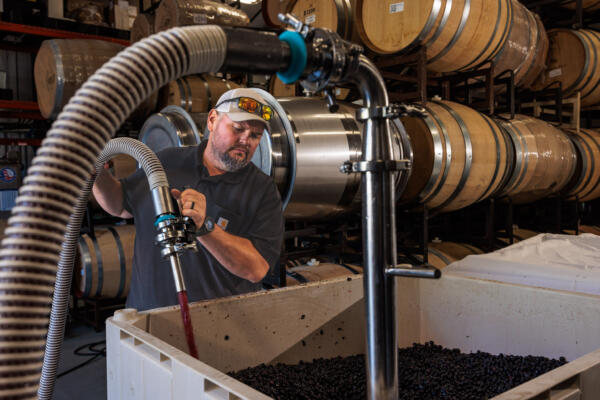
Shane Collins is a 4th generation farmer in the Lake Chelan Valley.
Austin Wheeler (AW): Can you please update me on some basic information: date of EV graduation, current employer and position, social media handles, preferred contact details?
Shane Collins (SC): I graduated June 2007 and am currently Winemaker at Fielding Hills Winery in Chelan, WA. For social media I currently only have my personal Facebook page. I prefer to be contacted at my work email, shane@fieldinghills.com
AW: How did you get into wine?
SC: I first got interested in wine in November of 2001 when I tried a Columbia Winery 2000 Cellarmaster’s Riesling. That certainly was a spark, and I began exploring wines I could get in Pullman while going to WSU. I drank a lot of South American 1.5 liter bottles of red blends one used to get at State run liquor stores. I had to go the budget route, being a college student, but I don’t remember the wines being disappointing. At the time it was great getting the equivalent of 2 bottles of wine for $7.
In the Fall of 2003 I was working apples for Dovex in Orondo. My friend Jonathan Kludt and his family opened 2 wineries in Manson: Lake Chelan Winery and Wapato Point Cellars. I began working in their tasting rooms on the sales floor in the infancy of the Lake Chelan Wine region and loved it. I started visiting other regions in Washington later that year and discovered a world of wine in my backyard that I was virtually unaware of before. I worked for them again in 2004; then in the fall of 2005 I moved to Walla Walla to attend the Institute for Enology and Viticulture. While attending the program I was fortunate enough to work at Spring Valley Vineyard and at the time I believed I would go into the vineyard side of the business with my hopes of becoming a vineyard manager. Spring Valley was an Estate Winery and that exposed me to the idea of being able to do both, and since then I have only worked at Estate Wineries.
AW: Is there someone in the EV world that you admire, including fellow EV alums?
SC: A lot of people! Gordy Hill, Collin Morrel, Kevin Corliss, Mike Means, Doug Gore, Rich Wheeler, Albert Don, Vicky Scharlau, Serge LaVille, Kent Walliser, Alan Busacca, Stan Clarke, Miles Anderson, Andrew Latta (alum), Victor Palencia (alum), Freddy Arrendondo (alum), Steve and Bobbi Kludt, Mike Sauer, Becca DeKleine, Todd Newhouse, Marshall Edwards, Scott, JJ, and Tyler Williams of Kiona, Paul Champoux, Jim McFerran, Wade Wolfe, Miguel Rodriguez, Kay Simon, Dick Boushey.
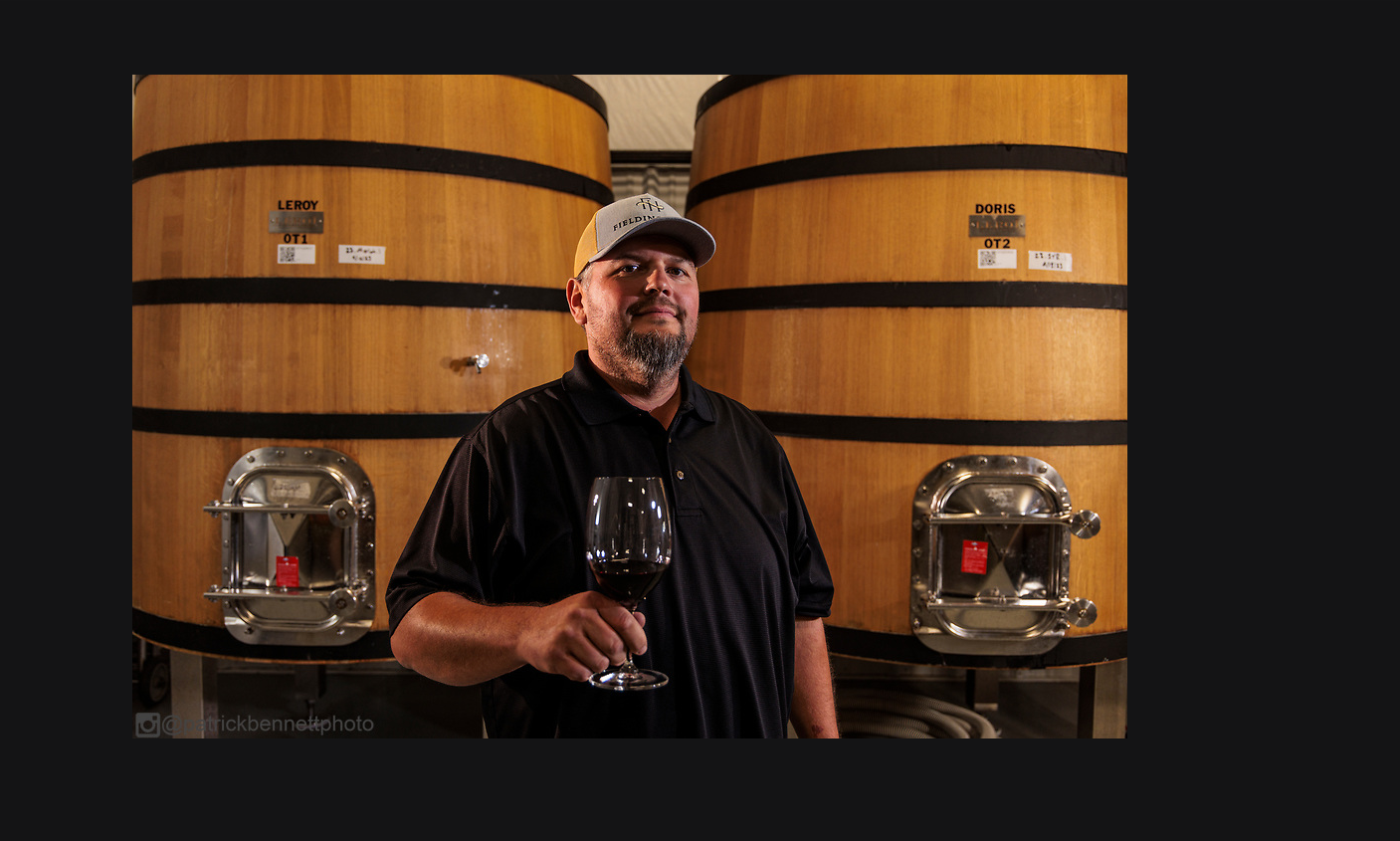
AW: What is special to you about working in the wine industry?
SC: Like a lot of other people, it’s the people I get to work with—the whole industry, from suppliers, growers and other winemakers. Everyone is willing to help and provide critical and constructive criticism and insight.
I also love being able to grow grapes and wine from where I was raised. I’m a 4th generation farmer in the Lake Chelan Valley and being able to farm and produce an ag product makes me very proud that I get to work with the same dirt my great grandparents did.
AW: What is your favorite part of your job?
SC: Harvest. Without a doubt. I love harvest and being so busy you just have to go, go, go. This is the time of year we have been waiting for and all the growing decisions we made to get the best fruit, and to begin creating the wines is fantastic. Certainly I can get a little burnout come November, but I truly believe this is when winemaking happens and creating the textures, depth, and concentration happens during this time.
AW: What are some of the challenges you’ve faced in the industry?
Selling wine. Selling wine is hard. From the very beginning when Chelan had no respect, to the wine boom of 2005-2017, and particularly now, selling wine has been very challenging.
Numerous challenges arise during each harvest, almost daily, but the biggest I can remember were the cool year of 2011 and trying to get all our reds ripe and the tactics we used, and the Smoke events of 2015 and 2018 as well. How to mitigate the smoke exposure the best we could but also deal with it, explain to consumers, and call a spade a spade when the smoke exposure was evident.
2015 was the year fires were burning in Chelan and it was bad. I remember the first few days of harvest that year. It was in August, which was early to pick for us, but we knew we had to start picking to minimize further exposure. The first few days on the crush pad were miserable. You could not see the Lake from Tsillan Cellars. It was bad for us processing and I bet it was far worse for the crew picking the grapes.
AW: What do you think differentiates and excites you about Washington wine?
SC: To me it’s obvious, we can grow every variety exceptionally well in most of Eastern WA and that is what makes us different.
I am excited about the future of smaller AVAs within the broader CV AVA. Within these smaller AVAs certain varieties may rise to the top as being best suited for those areas.
AW: How do you foresee climate change or social issues affecting the local industry in the next few years?
SC: No comment.
AW: What are some up-and-coming trends in wine that you’re following?
SC: Tracking the low and no alcohol movements. There is not much we can do for people who choose to abstain from alcohol, but we have unlimited opportunities for educating on the health aspects of wine vs other alcohol choices. It’s tough times with the WHO and surgeon general statements but the industry is united and pushing back against their lack of scientific arguments for the “overall” health that wine provides.
I’m interested in trying to make a low alcohol wine for that audience… but right now I don’t want to de-alc anything, so I am searching for a variety that has great flavor development at low brix so I can target something unique and different from our current big reds.
AW: What advice can you share with future EV graduates?
SC: If you think you can’t do something, do it anyway. Don’t fear mistakes but also don’t stay somewhere where they don’t value learning by doing and sometimes failing.
In June of 2007, a few days after graduating from WWCC, I went to work at Tsillan Cellars and on my 6th day of work the winemaker who hired me left and I was left steering the ship with a bottling less than a month away. I didn’t think I could do it, but I stuck it out, learned a bunch, messed up, and came out better and more knowledgeable. Luckily, we had a great consultant in Gordy Hill and we hired a much more experienced winemaker for that harvest, but in August of 2008 I was promoted to head winemaker.
Join the Conversation