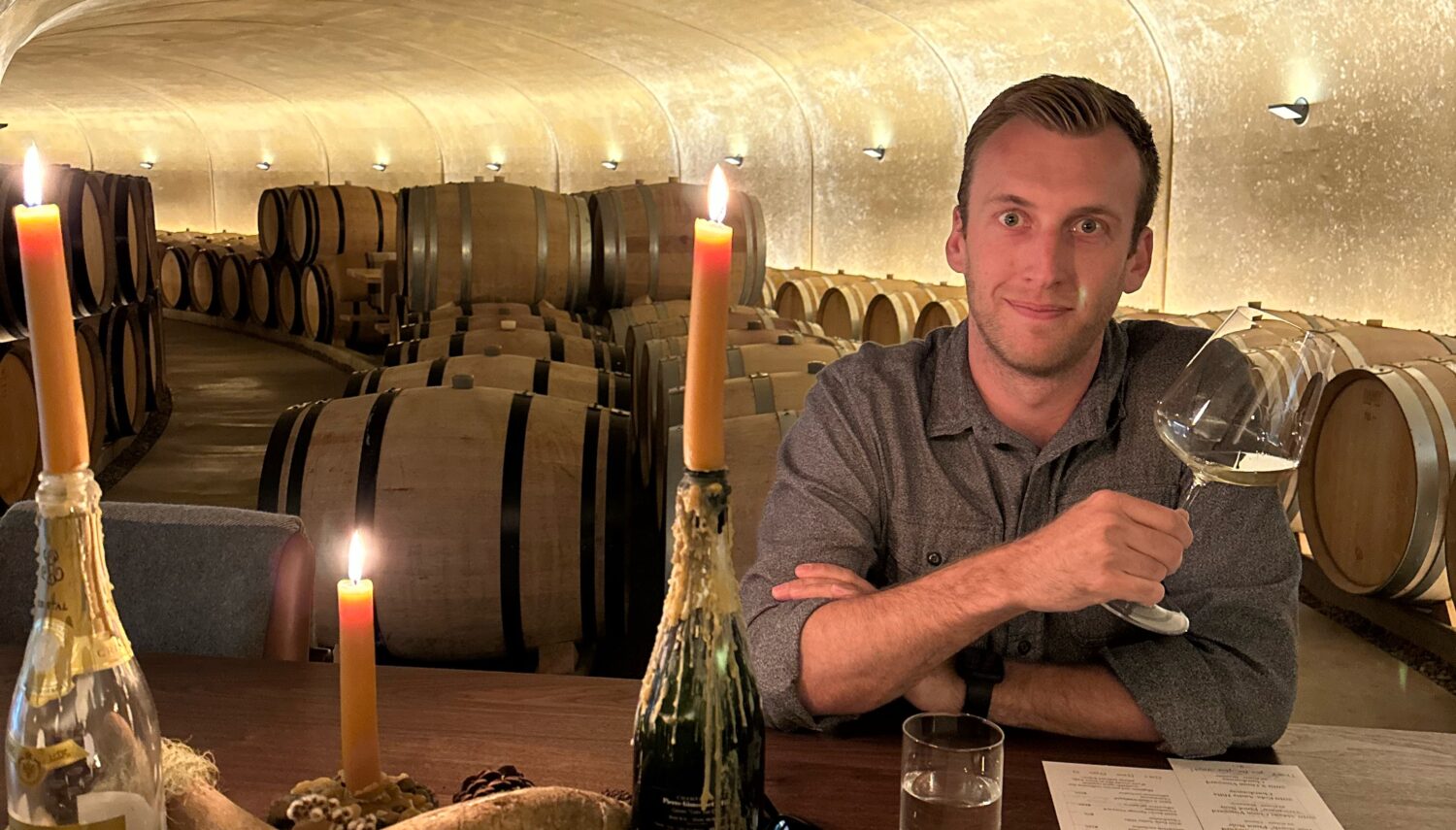
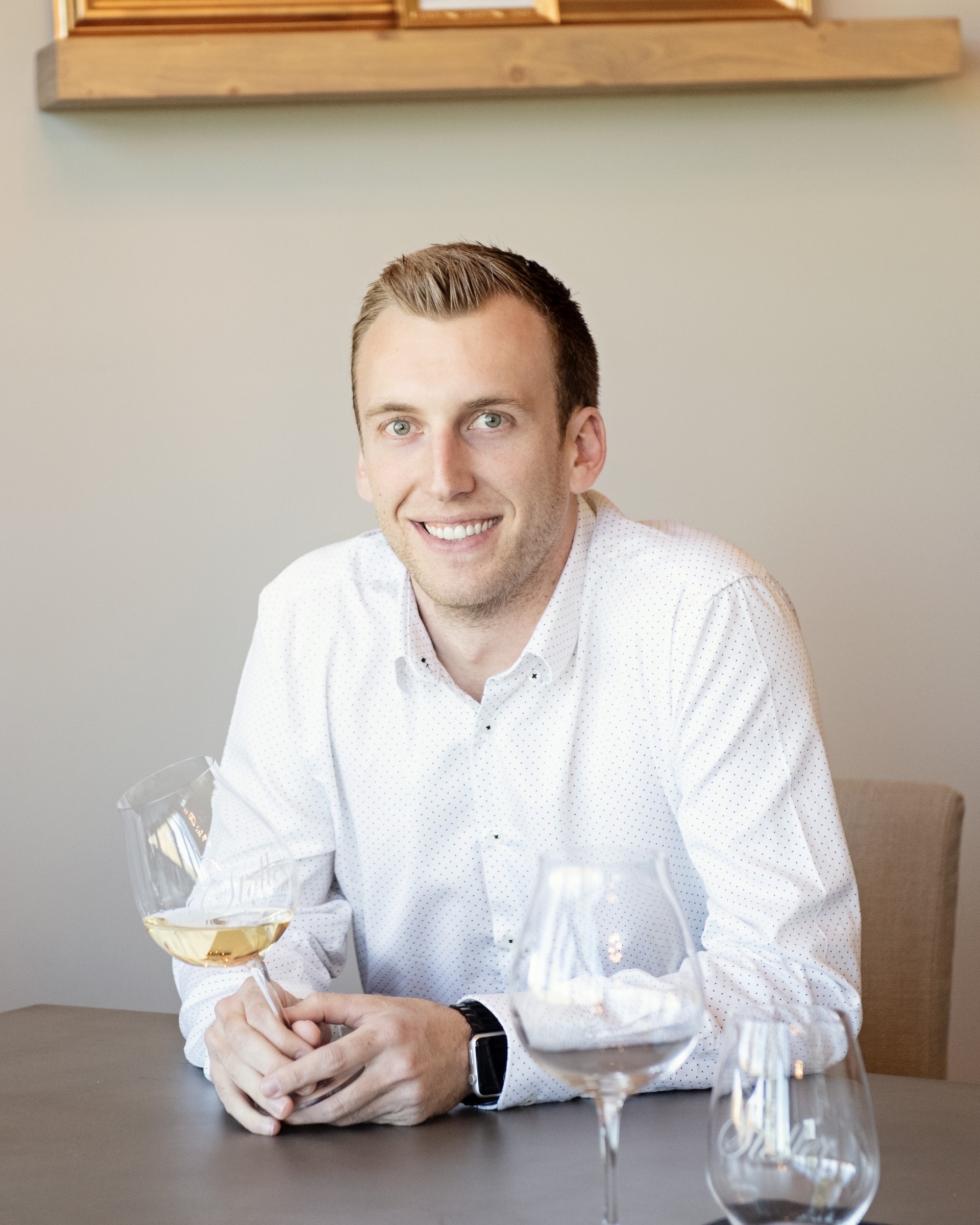
Introducing Tyler Bender, current Director of Consumer Sales at Alexana Estate in Oregon. Discussing his journey through the wine world.
Ways to contact:
LinkedIn: tyler-bender-31ab40111
Email (Preferred): tyler@revanavineyards.com
Michaela Adams (MA): When did you graduate from the EV program?
Tyler Bender (TB): It would’ve been spring of 2016.
MA: How did you get into wine?
TB: I grew up in the restaurant world and quickly fell in love with the story behind producers, wine regions, and the winemaking process. Plus, I noticed my tips going up as I started selling nicer wines.
MA: Did you work in restaurants here in Walla Walla while attending the program?
TB: No, I didn’t! I grew up in Colorado working in restaurants, and Sonny Lubick Steakhouse in Fort Collins was where everything really took off for me. They had an incredible team of servers who prioritized in-depth training, and that’s when I earned my Level 1 and Level 2 Sommelier certifications through the International Wine Guild in Denver. Then I found out you could actually go to school for winemaking! I discovered a great program in Walla Walla, packed up, and moved out there. While in Walla Walla, I worked at Woodward Canyon—which, at the time, kind of had a restaurant… in its own way! Haha.
MA: Is there someone in the EV world that you admire, including fellow EV alums?
TB: Oh gosh, that’s a long list! But my old professor, Tim Donahue, stands out. We didn’t know each other before the program, but we both grew up in Evergreen, Colorado. It blew my mind that some random guy from my hometown was out in the world making incredible wine. We even had some of the same connections from our small-town roots. Once I found out Tim was teaching at Walla Walla, that was all the push I needed to move there. Everyone looks up to Tim—both literally and as one of the best winemakers in the valley.
MA: What’s special to you about working in the wine industry?
TB: For me it’s this magical industry that mixes art and sales. I love the challenge of taming a grapevine and turning it into something amazing in a bottle. The balance between that and the business-driven wine culture here in the U.S. is what makes it so exciting. Even though I’m not in production anymore, I still love walking rows, it’s one of my favorite things to do.
MA: What is your favorite part of your job?
TB: I love connecting with people, which is why hospitality is such a great fit for me. Seeing guests from all over the world enjoy their wine and have this incredible experience is so rewarding; it’s contagious, too. No matter how my day is going, sharing that moment with them always lifts me up. And after six hours in Excel, stepping into the tasting room for a breath of fresh air with customers is the best.
MA: What are some of the challenges you’ve faced in the industry?
TB: COVID is an obvious one, but oddly, it’s also one of my best memories in the industry. I’ve always had an outside-the-box mindset, especially with wine marketing, and I don’t like hearing, “That’s not possible” or “We’ve always done it this way.” COVID forced everyone to think differently, which meant they had to embrace some of my crazy ideas—and that was a lot of fun. Innovation in the wine industry has always fascinated me, and the pandemic gave me even more space to explore it.
MA: What do you think differentiates and excites you about Washington wine?
TB: I’m based in Oregon, but I still drink a ton of Washington wine—it has a special place in my heart. I love and respect Oregon Pinot Noir; it’s some of the best I’ve ever had. But Washington wine offers incredible quality from well-known varietals without the frills. You can have world-class Cabernet Sauvignon without the pretentiousness of some other regions it’s planted in. The soil, the land, and the people are what truly set Washington wines apart from the rest of the world.
MA: How do you foresee climate change or social issues affecting the local industry in the next few years?
TB: It’s a lot like my thoughts on COVID—it’s going to push change and innovation faster than it might have otherwise. As the climate shifts, more people may be forced to rethink organic vineyards, use less water, or embrace cover crops. Social changes are coming, too. The next generation will be different, no matter what, and that has always been the case. It’ll challenge the way people think, especially in sales, which I find exciting. For some, it’s terrifying—but I love it.
MA: What are some up-and-coming trends in wine that you’re following?
TB: I’ve always been interested in the lower alcohol trend. I love seeing producers make light, bright white and red wines. I still appreciate the alcohol component, so I’m not sure about the N/A wine scene, but I’m excited to see how we can create lower-calorie white wines while still preserving the key characteristics of each varietal.
MA: What advice can you share with future EV graduates?
TB: I always say, “I don’t know, but I can find out,” and I still use that phrase every single day. It’s not about knowing everything—it’s about how quickly you can find the answer or connect with someone who does. The only exception is Tim Donahue. Somehow, he just knows everything. I have no idea how, but he’s got it all figured out.
Join the Conversation